We all love the rumble of a cinematic explosion or the deep bass of our favorite playlist. But in apartment living, that immersive sound can quickly turn into a neighbor’s worst nightmare.
How do we enjoy movie night without accidentally turning our neighbor’s living room into a vibrating earthquake zone? The good news is that you don't have to give up your bass to keep the peace.
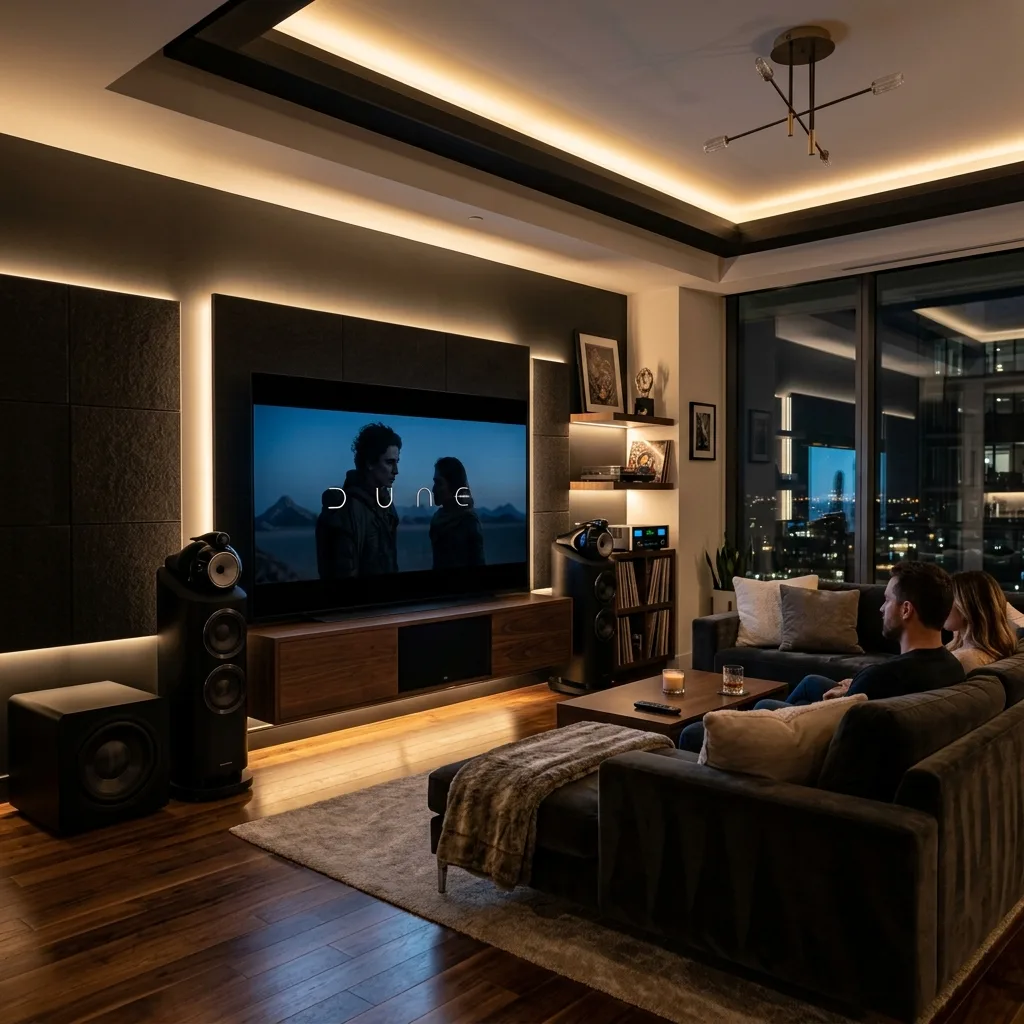
The Real Problem: It’s Not Just Volume, It’s Vibration
When your neighbor complains about your home theater, your first instinct is probably to turn down the volume. But surprisingly, the actual loudness in the air is rarely the main culprit.
The real troublemaker is what acoustic engineers call structure-borne noise.
The "Tuning Fork" Effect in Concrete and Bricks
Most modern apartment buildings in India are built with concrete slabs and red brick walls. While these sturdy materials are great for blocking out talking or TV chatter, they act very differently when hit by low-frequency bass soundwaves.
Think of your building's frame like a giant tuning fork. When your subwoofer sits directly on the floor, its mechanical vibrations pour straight into the concrete.
From there, those vibrations travel effortlessly through the interconnected brick walls and floor slabs at blinding speeds. By the time the sound reaches the apartment upstairs, downstairs, or next door, it transforms into a deep, rattling thrum that you can actually feel in your chest!
Acoustic Fact: Air-Borne vs. Structure-Borne
Air-borne sound loses energy quickly over distance, but dense concrete and brick conduct vibration up to 10 times faster than air! This is why your neighbor feels the vibration even when dialogue is barely audible.
Why "Just Turning It Down" Is Only a Temporary Fix
Lowering the volume dial might stop the rattling, but it also ruins your movie experience. You end up straining to hear dialogue while still worrying if the action scenes are disturbing the peace.
More importantly, turning it down doesn't solve the physics problem. Because the subwoofer is still physically touching the floor, even moderate bass frequencies will continue to conduct through the concrete slab.
To get a true, permanent fix, we need to stop the vibration from touching the building in the first place.
The Win-Win Solution: Acoustic Decoupling
The secret to friendly apartment home theater ownership is a concept called acoustic decoupling. Simply put, you need to physically separate your sound system from the building's structure!
Here are three easy and affordable hardware upgrades that let you keep your rich bass while giving your neighbors total silence:
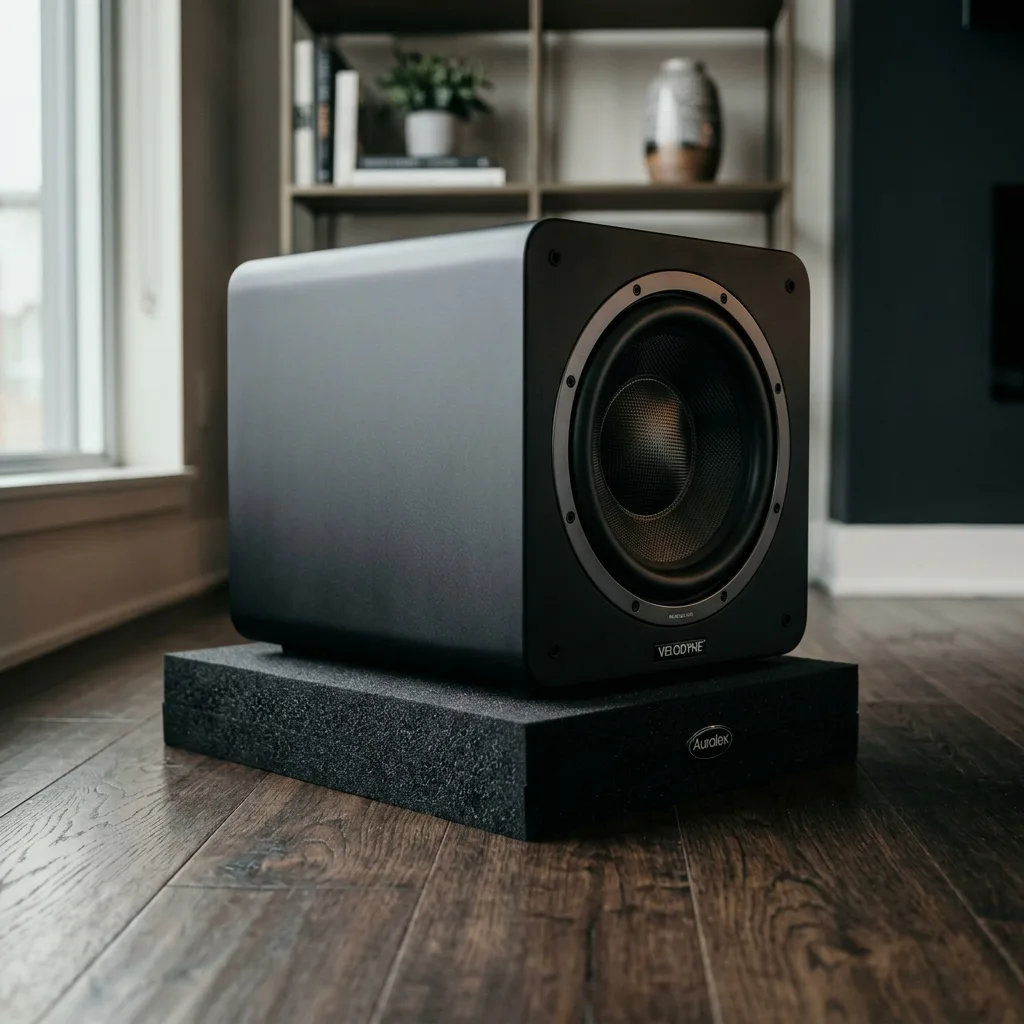
1. Subwoofer Isolation Pads
Your subwoofer is the heavy hitter responsible for nearly 90% of structural vibrations. Elevating it off the floor is the single most effective change you can make today.
- High-Density Foam Risers: These simple foam platforms absorb mechanical energy before it ever reaches the concrete floor.
- Elastomeric Isolation Feet: Upgrading your subwoofer’s stock plastic feet to specialized rubber or elastomer cones works wonders for dampening vibrations.
- Floating Platforms: For high-end setups, dedicated isolation platforms with built-in acoustic barriers provide maximum decoupling power.
2. Rubber Spacers for Wall-Mounted Speakers
If your surround sound speakers or soundbar are mounted directly to red brick or drywall, they are actively vibrating the shared wall.
- Insert Neoprene Washers: Place thick neoprene or rubber washers between the mounting bracket and the wall surface.
- Use Anti-Vibration Anchors: Swap out standard heavy-duty screws for acoustically damped wall anchors to soften the direct contact point.
- Leave an Air Gap: Ensure the back of the speaker casing never directly touches the wall, leaving a small buffer zone for air circulation.
3. Smart Audio Settings (The Free Fix)
While hardware decoupling does the heavy lifting, a few quick software tweaks can instantly optimize your sound for apartment living.
- Enable "Night Mode" or Dynamic Range Compression: This setting tames sudden booming explosions while keeping whispered dialogue crisp and clear.
- Adjust the Crossover Frequency: Set your subwoofer crossover around 80Hz to 100Hz so it only handles the lowest, most necessary rumbles instead of muddy mid-bass.
- Use Room Correction Calibration: Most modern receivers come with a microphone to calibrate acoustics specific to your room, eliminating harsh frequency spikes that rattle walls.
Good Neighbors Make the Best Communities
At Simplihood, we believe that harmonious apartment living is all about empathy and open communication. You shouldn't have to walk on eggshells in your own home, and your neighbors shouldn't have to endure unwanted midnight serenades.
If you're setting up a new home theater or testing out new isolation pads, reach out to your neighbors! Let them know you're making adjustments to keep the noise down, and ask them if they notice a positive difference.
Nine times out of ten, a simple, proactive conversation turns a potential noise complaint into mutual respect and community goodwill.